
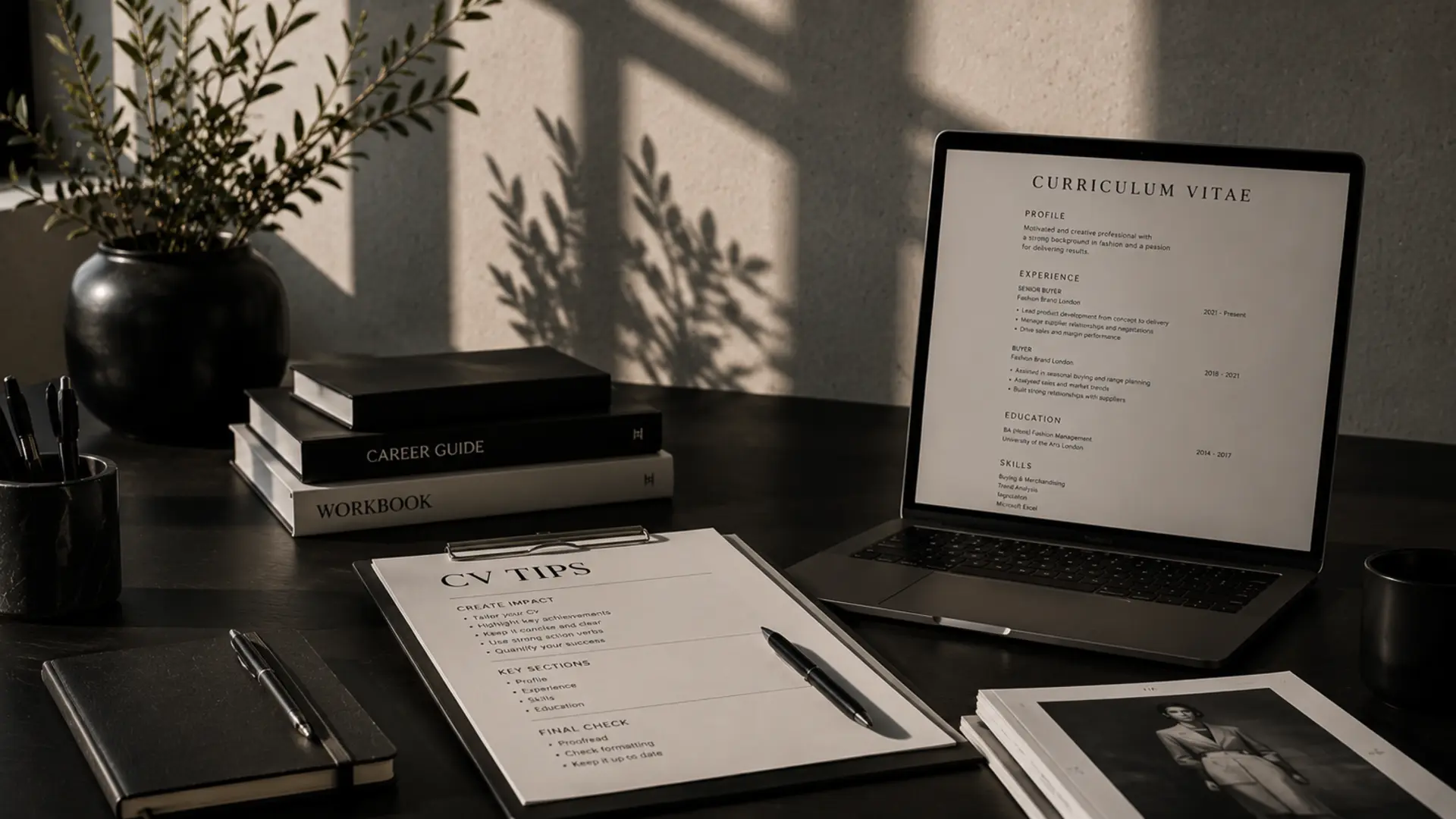
Writing a CV can feel like a big task, but the easiest way to start is with the facts. Get your employment and education sections down first, then write your profile once you're in the flow.
Use this order:
For recent graduates, place education before employment.
Keep your CV to a maximum of two pages and use a clean Word document with a simple, linear layout. Avoid columns, graphs and overly designed templates.
Save the file as Your Full Name CV.
There's no need to include a photo, date of birth, marital status or other personal details.
Your profile should be two or three sentences covering:
Keep it specific and avoid generic statements.
Use bullet points to highlight your main responsibilities and achievements. Include real detail where possible, such as:
For creative roles, include links to your portfolio or relevant websites.
Where a previous employer may not be widely known, add a short line explaining what the business does.
As your career progresses, give more detail to recent roles and reduce older positions to the key points.
Any employment gap longer than a month should be clearly listed, whether it was for travel, parental leave, further education or a career break.
Your hobbies and interests section is the place to show a little more personality.
Be specific.
Instead of simply writing "cooking" or "sport", mention what you enjoy, what you've achieved or what makes it relevant to you.
You don't need to include "References available on request".
And whether you use full stops at the end of bullet points or not, just keep it consistent.
Browse Jobs